Coaching is at a Major Inflection Point
Coaching is at a major inflection point. New technology, ways of working, developing the craft, are you up to speed? This conference brings together experts in artificial intelligence, C-suite leaders, wellbeing researchers, and coaching thought leaders.
Come join us May 1-2, 2026 at the Coaching in Leadership and Healthcare Conference: Working at the Inflection Point. The Harvard Continuing Medical Education course will be held at the beautiful Renaissance Boston Waterfront Hotel.
This is an opportunity to connect with other coaches, interface with cutting-edge science, and meet leaders in the field. In a time when community is more important than ever, this is a chance to make professional connections while also upgrading your coaching.








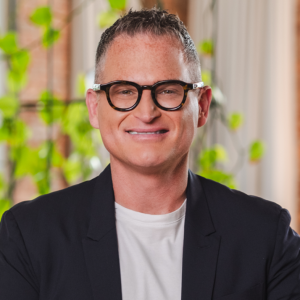
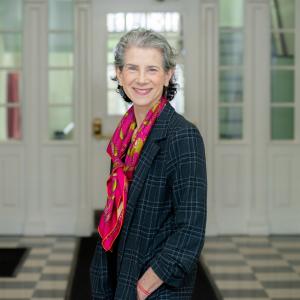
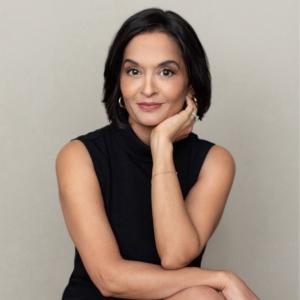

Exclusive In-Person Event
Institute of Coaching Leadership Forum
Coaching at the Inflection Point
For IOC Professional Fellows & Full Members Only
Thursday, April 30, 2026
8:30am-5:30pm ET
Renaissance Boston Waterfront Hotel
*This one-day Leadership Forum event is not part of the main conference and must be registered for separately.
Registration Fees
Whether you are a seasoned coach, a leader with a keen interest in coaching, or a professional in the healthcare industry (physician, clinician, or health & wellness coach)
this conference is tailored to elevate your understanding and application of coaching principles for professional, emotional, and physical well-being.
Attendees of the conference will have the opportunity to earn 26.5 CCE hours from the ICF and 12.5 NBHWC credits, supporting their professional development and growth.
Agenda
* All agenda sessions are in Eastern Time.
"Here's what nobody's fessing up about organizational change:
The old playbook is broken. You know this to be true. You've watched smart people with good intentions create expensive disasters. Organizational change isn't just faster and messier and more relentless than it used to be. It's fundamentally different.
Yet most of us are still navigating with yesterday's map. If you're leading change and feeling the pressure, what you're missing isn't more advice. There's already an avalanche of trademarked methodologies, bestselling frameworks, and TED talks out there. Some terrible, much mediocre, most designed for a world that no longer exists.
What's missing is the operating system update. In this session, you'll discover:
This isn't theory. It's practical wisdom from thirty years in the trenches."
- Why you need to master two completely different spheres of change — and why Easy Change tactics actually make Hard Change worse
- The four foundational truths about change that everyone tries to sidestep because they're inconvenient, uncomfortable, and absolutely essential
"This interactive and research-informed session will explore the essential role of love and human connection in building trauma-informed leaders and organizations. Drawing from the neuroscience of attachment, connection, and belonging, we will examine how love—understood as empathy, compassion, and genuine regard for others—shapes safe and thriving communities, systems, and workplaces. Participants will gain insight into how environments of mattering and inclusion regulate the nervous system, reduce stress, and foster resilience. Together, we will discuss practical strategies leaders and organizations can adopt to embed compassionate practices into policies, culture, and daily interactions. Through dialogue, reflection, and applied exercises, participants will learn how love is not a “soft” add-on but a foundational force for equity, well-being, and sustainable organizational success.
By the end of this session, participants will be able to:
- Explain the neuroscience of love and connection and its impact on the human brain, stress response, and resilience.
- Differentiate between trauma-aware, trauma-sensitive, and trauma-informed practices and how love serves as a guiding principle across all three.
- Identify the role of mattering and belonging in shaping healthy organizational cultures that support both individual and collective well-being.
- Recognize the leadership behaviors and organizational policies that either cultivate or erode safe, compassionate environments.
- Apply practical strategies and tools to create cultures of care that balance accountability, equity, and compassion.
- Reflect on their own leadership practices and identify ways to integrate love, empathy, and connection as core leadership competencies."
"Why is change so difficult, even when we are genuinely committed to it? How can we do a better job closing the gap between what we intend and our actual behaviors? For example, we might intend to live a healthier lifestyle but skip exercise, overeat or make less healthy dietary choices. Similarly, we may genuinely want a better work-life balance and yet we continue working overtime. By using an immunity to change approach, developed by Kegan and Lahey, we can see the hidden mental and emotional barriers, often formed long ago, that help us to understand why we behave counter to our goals. Once we become aware of these self-protective patterns, we can examine, evaluate and reformulate these barriers considering our current experiences.
Have you ever set a goal but struggled to follow through? What do you think might be holding you back? Through participating in an interactive process and applying this methodology to yourself, you’ll identify your personal barrier to change. The session concludes with practical methods, such as examining underlying assumptions and creating supportive environments, to help address these obstacles. Understanding and addressing these barriers contributes to lasting behavior changes over time, leading to greater fulfillment."
"To say that the rise of AI and technological innovation is impacting the coaching industry is an understatement. We are all experiencing the wave of disruption brought to the world with the emergence of ChatGPT, Claude, Grok, and a number of AI coaching tools like Aimy, Valence, Sherlock etc. Coaching thought leaders have developed and distributed chatbots that incorporate their years in study and application of coaching: The Marshall Bot (Marshall Goldsmith) and the Marty Bot (Marty Seligman) are two of the best known. Our clients are using ChatGPT and other tech tools as coaches whether we approve or not. This tsunami of AI floods into all aspects of our lives – and our coaching practices, for good or ill.
There are many obvious questions worth grappling with. Here are just a few:
- Will AI replace human coaching?
- Is the emergence of AI in the coaching field a positive or negative for coaches?
- Do we embrace AI in service of our clients as an enhancement to human coaching?
- Do we, instead, reject the intrusion of LLM’s (large language models) into our domain, as they may be “experts” at advice-giving but don’t replace the nuance and depth of human-to-human interaction?
The most important question may be this: what can we do as coaches to retain and reinforce the value of human-to-human interaction – both personally and professionally, in the midst of transformative change?
In this interactive panel session, we will dive deep into these questions with experts who bring the full range of perspectives, on research, practice, ethics, and more."
"In an era in which people feel increasingly distracted, rushed, and uncertain, we can spend a disproportionate amount of time focusing on the future. All this speed, anticipation, and planning can cause us to overlook critical moments of choice. This is especially problematic in an era of artificial intelligence, in which people are increasingly eager for authentic human connection. In this two-hour experiential session, Dr. David Drake and Dr. Robert Biswas-Diener will explore skills that are essential for “working in the moment” more effectively and with the potential for greater relatedness.
Together, we will explore three interpersonal processes that are the foundation for working with people —in management, medicine, education, or coaching. Drawing on David’s work with The Five Maturities, we will begin by examining the pace of conversations and how this relates to our capacity to BE with people. We will build on this foundation to help participants better understand attention and gain clarity on their own noticing habits. Finally, we will look at tools for deepening conversations. For each skill—pacing, noticing, and deepening-- Robert and David will guide participants in brief practices, dialogues, and reflections to support personal and collective growth.
The presenters, recognized by Thinkers50 as two of the world’s most influential executive coaches, will bring decades of experience to raise the bar on how we show up to our clients."
"One of the best ways to understand how coaching works is by observing it. In this session, three thought-leaders in the field of coaching demonstrate their unique approaches. After a brief set-up offering an overview of each approach and what to look for, Drs. David Drake, Lisa Lahey, and Robert Biswas-Diener will each coach the same client, taking turns to come on stage and start fresh with the client. This will give delegates an opportunity to observe stylistic differences, thematic similarities, and specific skills and assumptions about how to guide a client towards reaching their goals unique to each coach. More importantly, delegates can use these demonstrations as lenses through which to reflect on their own practice, skills, and habits.
David Drake: David is the founder of Narrative Coaching. This approach, informed by rites of passage and Jungian psychology, works experientially, somatically and developmentally with clients’ narrative material in real time in the ‘field’ to address what they need most right now.
Lisa Lahey: Lisa co-developed the Immunity-to-Change coaching method, based on constructive-developmental theory. This structured process helps clients to become aware of their unconscious mental and emotional barriers that, while protective, conflict with growth goals. Clients then learn how to evaluate and reformulate these barriers considering their current experiences.
Robert Biswas-Diener: Robert is a pioneer in positive psychology coaching. This approach, informed by scientific inquiry, prioritizes client wellbeing alongside success. Rather than “achieving goals, at any cost” Robert is interested in “achieving goals, but not at the cost of wellbeing. "
What if leaders and organizations could produce the same growth and prosperity they do now while improving rather than consuming human and planetary well-being? Rosmarin, Hull, and Moore will lay out the scientific case for human-centeredness in leadership. Rosmarin will describe the Institute of Coaching’s research project on defining and operationalizing human-centered leadership. Hull and Moore will describe how coaches can support human-centered leadership.
"In a world that is quickly being reshaped by artificial intelligence, the very nature of leadership is evolving. This keynote explores the profound shifts facing the global workforce and the critical role of coaches and leaders in this new era. Google’s Chief Learning Officer, Brian Glaser, will examine the practical theory, research, and application of learning, leadership, and coaching in an AI-driven environment. Drawing from the latest insights on the future of work and high-performing cultures, this session will provide a roadmap for leaders to:
- Understand the ""shape of jobs"" and the imperative of upskilling in a landscape of rapid change.
- Equip themselves and their teams to become ""future-ready leaders.""
- Engage and empower their workforce through the uncertainty and anxiety that AI can introduce.
- Reimagine the ""role of the manager"" as a partner in coaching and development, not just a director of tasks.
Join this session to learn how to lead and learn in the AI era, and discover how to cultivate truly human, high-impact leadership capabilities."
It takes physical and psychological grit to be a dancer. Time is not your friend. Your body and mind are stretched to their limits as they need sustained peak performance for years. Examples of the connections and lessons coaches can learn from observing a ballet coaching session are numerous. Core to the work is co-creation of an ideal working relationship as the director is pulling the best and helping dancers achieve more than they think is possible. We will observe core coaching skills in action: These include evoking awareness as the director provides feedback to the dancers to see themselves and their character in new ways to increase capacity to bring the essence of the story of ballet and the conceptual pieces to life. Nowhere is embodying presence more of a core skill and the director draws this out of the dancer by continuous feedback allowing iterative development. He notes the macro and micro nonverbal actions of the dancers. The core of helping a professional ballet dancer access their inner fortitude and explore what might block it is one focus of our discussion.
"In an era of digital distractions and prevalent burnout, it’s increasingly difficult to maintain sustained attention for significant productivity. In this talk, Dr. Aditi Nerurkar educates using science-backed insights on why multitasking is an unfounded myth, and how creating digital boundaries and cultivating the brain’s need for compartmentalization through monotasking are the key therapeutic interventions to enhancing productivity and decreasing maladaptive levels of stress that lead to burnout.
With measured, effective and sustainable strategies to rewire the brain, resist digital distractions, and amplify the capacity to concentrate, Dr. Nerurkar empowers her audience to reset stress and burnout and maximize the dimensions of attention, problem-solving skills, and productivity."
"Why are groups so hard? From boring work meetings to dysfunctional families to warring nations, group dynamics shape every aspect of our lives. How can we avoid the common pitfalls of living and working together and get the most from our groups? The solution isn’t to change individuals—it’s to understand the world from a collective perspective.
Fisher, one of the world’s foremost experts on group dynamics, distills decades of research into practical strategies to help groups function at their highest levels. It all starts with knowing the six most potent factors that shape collective success: goals, tasks, composition, norms, psychological safety, and coaching.
The secret to getting the most from your groups is using these factors to work with the invisible forces of group dynamics instead of being mindlessly pushed around by them."
"What distinguishes a technically sound coach from a transformational one?
In this masterclass-style workshop for experienced coaches and coach educators, Dr. Haesun Moon returns to the Institute of Coaching with an evolved exploration of linguistic precision and conversational design. While the Dialogic Orientation Quadrant (DOQ) has become a globally adopted framework for coach learning and supervision, this session goes further—into the real work of words that unfolds beyond the quadrant.
At the centre of this exploration is interfluence: the moment-by-moment shaping of meaning between coach and client. Grounded in communication science—particularly the study of how language does things—this session examines what coaches signal, invite, soften, or disrupt through their word choices, timing, and tone.
You’ll be hands-on from the start, engaging with real dialogue excerpts, short video clips, and your own transcripts or recordings. Rather than learning new techniques, you’ll sharpen your noticing—becoming more deliberate in the subtle decisions that build (or block) movement in conversation. An evidence-based approach to refining the choices that make your care audible.
By the end of this session, participants will be able to:
- Apply the concept of interfluence to real coaching conversations, identifying its effect on momentum and meaning.
- Discern subtle linguistic choices—such as sequencing, softening, calibration, and timing—that shape client direction and agency.
- Refine their own coaching language and response patterns through live analysis, guided reflection, and peer engagement."
Uncertainty is inescapable at work and in life. As a result, it frequently appears as an issue in coaching. When this happens, there is a natural tendency to want to replace uncertainty with certainty, often with our brains creating a “worst-case scenario” picture as a way of finding certainty.
In this workshop, we will explore this topic by exploring:
- how coaches may notice a client experiencing uncertainty,
- how coaches and clients might better create space for and tolerate uncertainty,
- how viewing coaching as a “way finding process” can help.
"In this talk, Brian Lowery—Stanford professor and author of Selfless—invites leaders to reconsider what it means to lead. Drawing from his book and TED Talk, How to Live a Meaningful Life, he shows that the self is not an independent, fixed entity but a social creation shaped through relationships, roles, and context. This perspective reframes leadership from an individual performance to a shared process of meaning-making within teams and organizations.
Lowery will explore how identity and connection intertwine in the practice of leadership. He offers practical insight into how leaders can recognize the social forces that define them, use that awareness to foster more genuine relationships, and lead with a deeper sense of responsibility to the communities that shape them. The result is a shift from seeing leadership as self-expression to understanding it as co-creation."
"In the relentless pace of healthcare, leaders and those they lead often feel unseen, undervalued, and torn between conflicting demands, fueling the burnout crisis across our systems. But what if well-being wasn’t just a personal pursuit, but a lever for transforming entire teams and organizations?
This dynamic keynote invites coaches to reimagine leadership development through the lens of well-being as a strategic advantage and cultural foundation. Dr. Kerri Palamara (MD, Mass General Brigham) and Dr. Aithan Shapira (PhD, MIT/TILT; human-centered transformation expert across health, tech, finance, and energy) will share how well-being centered leadership can shift cultures from exhaustion to possibility, from fragmentation to community.
You will hear stories of leaders who have reclaimed agency and voice while fostering resilience in their teams—and the pivotal role coaching plays in these transformations. Learn how coaching can unlock leaders’ capacity to navigate complexity while centering well-being, catalyzing ripple effects that extend to the people and communities they serve.
Come ready to challenge assumptions, gather practical frameworks, and leave inspired to coach the next chapter of healthcare leadership with well-being at its core."
"AI and automation are redefining how work gets done. In this session we will unpack what it takes for organizations to thrive in the agentic era. Tracey will share lessons from Moderna's journey merging People and Digital into one organization and re-architecting workflows to keep pace with change.
Key themes include:
- The new frontier of agentic AI, where technology shifts from passive tools to active collaborators.
- Why culture and technology can’t be separated: leaders must design systems where people, process, and AI evolve together.
- How to sustain engagement and adaptability when the work itself keeps getting re-drawn."
Interested in becoming an Exhibitor?
Limited Exhibitor Spaces Available
Gain visibility among renowned coaches, esteemed thought leaders, prominent healthcare
professionals, and influential HR & organizational leaders.
As a conference exhibitor, your organization will have the opportunity to host an exhibit table where you can network and interact with the attendees. Additionally, you have the option to purchase a full- or half-page advertisement in our Conference Networking Brochure, which can feature your logo.
For additional information, download the full exhibitor form.
Conference Venue
Renaissance Boston Waterfront Hotel
606 Congress Street, Boston, MA 02210
877-901-6632
$309 plus tax
* Book your room before April 08, 2026 to get our group rate
* A limited number of sleeping rooms have been reserved at the discounted rate of $309 per night plus taxes for Single/Double Occupancy. Make your hotel reservation online prior to April 8, 2026, in order to be eligible for the discount. Please book as soon as possible; this room block usually sells out well in advance of the expiration date.
Near By Hotels


